How Berlin Dreams sees basketball as a sport, a community and a cultural space for a new generation in Berlin
For Simon Dube Paul, the connection between basketball and HipHop did not begin in an arena or on a perfectly staged court. It began at home, with a CD player and the singles his father used to bring him. 50 Cent, Lloyd Banks, Ja Rule, Nelly. Dube played them over and over until the CDs were so scratched they barely worked anymore.
HipHop stayed. So did basketball.
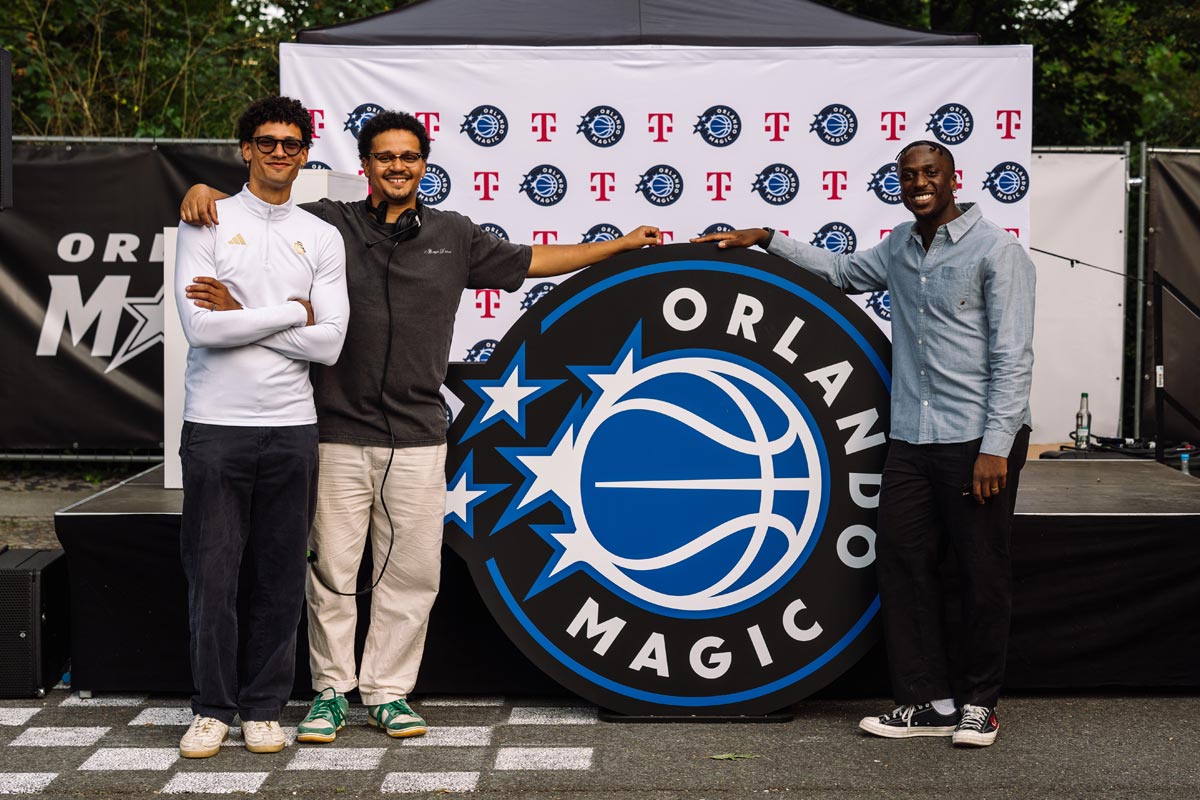
“The two went hand in hand as I was growing up,” Dube says. Today, he is Managing Director of Berlin Dreams, working alongside his brother and fellow Managing Director Amo Paul and Leadership Team member Madu Cole on a vision of basketball that reaches far beyond results, league tables and the 40 minutes of a game.
Berlin Dreams deliberately does not define itself simply as a basketball club. Its own description starts somewhere else: with an international community. Basketball comes second. Behind that choice is a bigger question about the role a sports club can play in a city like Berlin today. A place to train and compete, certainly. But also a meeting point, a cultural space, a network and a place where people can experience a sense of belonging.
The leadership team’s shared history goes back further than the name Berlin Dreams. In 2019, Dube, Amo and Madu took over BG 2000 together. It later evolved into the Berlin Braves, a project that rose through the ranks to Germany’s ProB, the country’s third tier of basketball, while beginning to tell a different story about the sport through community, culture, visual identity and storytelling.
Berlin Dreams and the collaboration with DBV Charlottenburg marked the beginning of the next chapter. The experience of the previous years became the foundation for a new shared identity with even greater sporting and social ambitions.
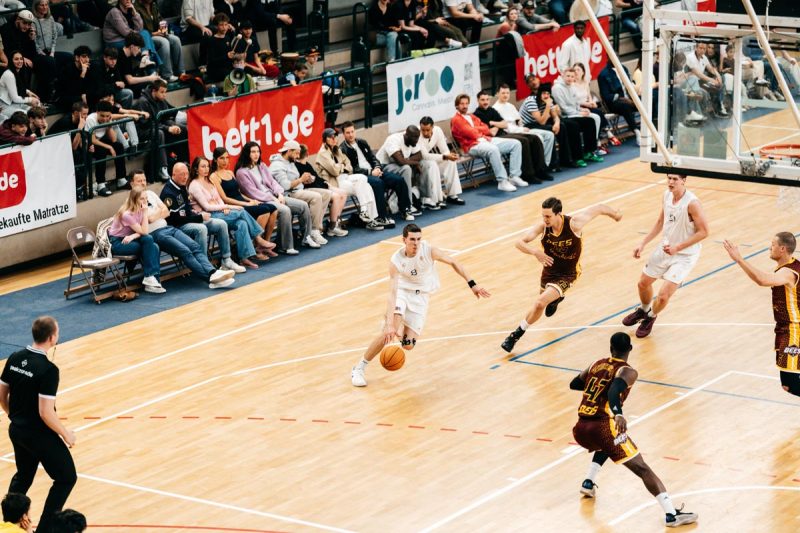
Today, Berlin Dreams brings five programmes together under one name: the men’s team in the 1. Regionalliga Nord, the women’s team in the 2. Regionalliga Ost, the NBBL youth programme and two wheelchair basketball teams. The Sömmeringhalle in Charlottenburg is intended to be more than a home court. It is a place where different sides of Berlin basketball can come together.
That evolution says a lot about what Berlin Dreams means when it talks about community. It is not simply about filling the stands. It is about creating different ways into basketball and bringing them together under one shared identity.
For Dube, that idea is deeply connected to the culture he grew up with. “HipHop comes from the streets, just like basketball.”
For decades, both have created spaces of their own. Both can bring people together regardless of where they come from or their social background. And both have repeatedly given young people opportunities to express themselves, gain recognition and feel part of something.
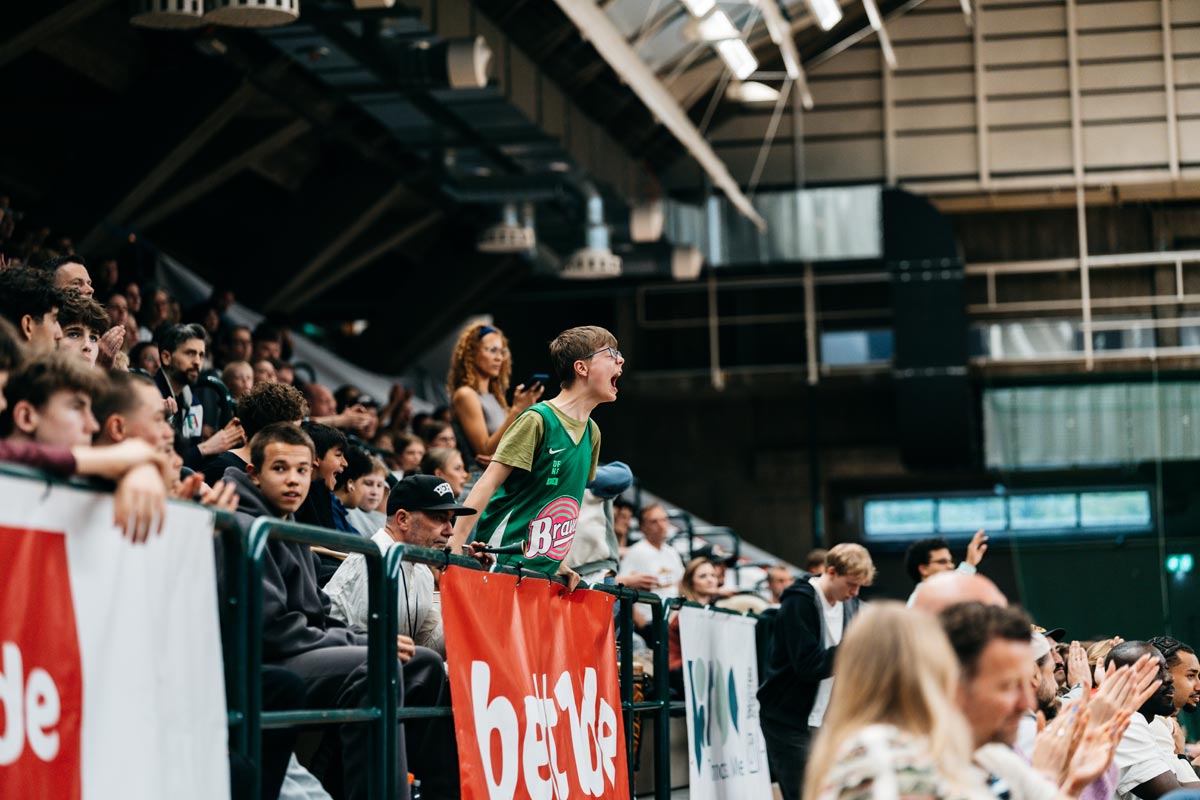
Sometimes, All It Takes Is a Ball
For Dube, the social power of sport begins with something remarkably simple. “You need a ball and two bags to use as goals, or, in our case, a hoop. Or you simply lace up your shoes and start running.”
You do not need to share the same background, speak the same language or come from the same part of society. You do not need to know where someone comes from before you pass them the ball.
“Sport is accessible and, at the same time, incredibly holistic. There are very few barriers between cultures and identities, and in sport everyone is equal,” Dube says. “The joy of movement, the love of the game and simply being together are what matter.” Basketball can become a shared language.
Dube points to American basketball culture, where the court has served for generations as a place to grow up and, for some, as a way to overcome social barriers. Berlin Dreams wants to harness that same power: bringing people and cultures together, leaving social differences behind for a moment and allowing a shared passion to become something bigger than the game itself. Because what you learn on the court does not have to stay there.
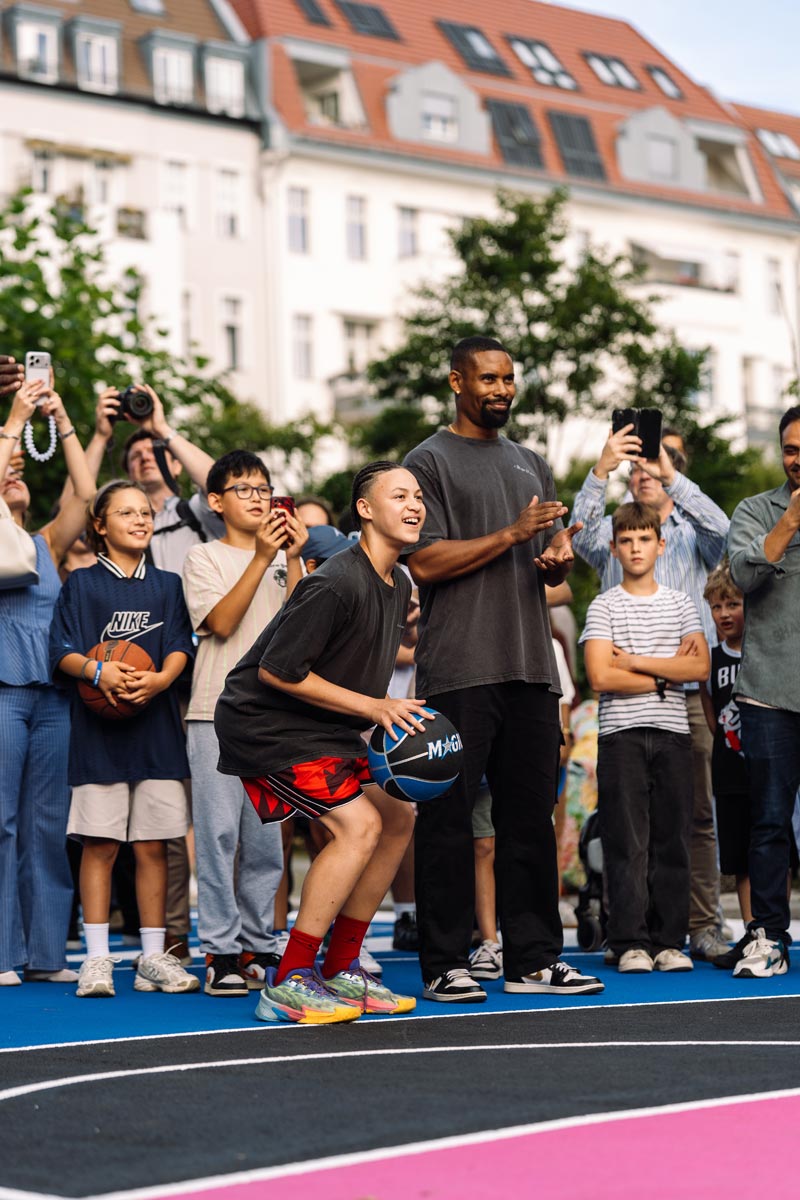
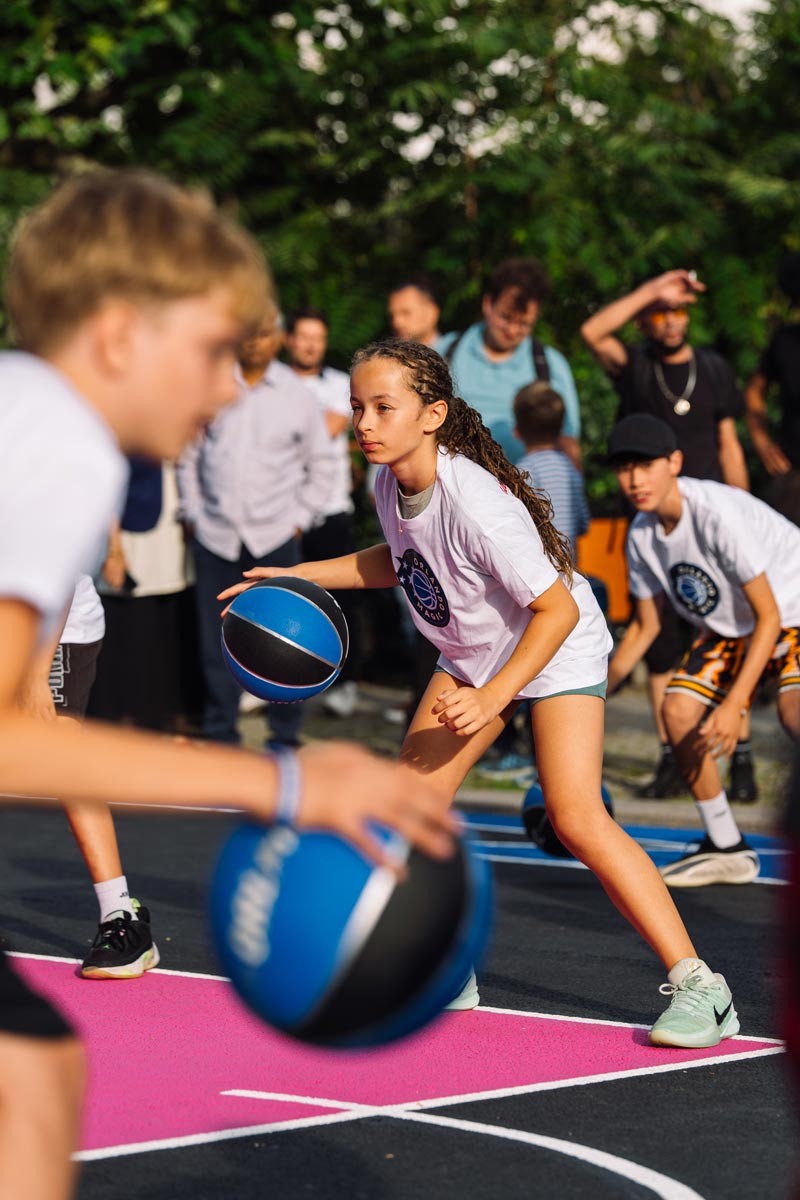
What Training Can Teach You About Life
Anyone who has been part of a team quickly learns that talent alone is not enough. Practice starts at a certain time. Other people rely on you to show up. A team only works when people take responsibility for one another. Progress requires repetition. Losing is as much a part of the journey as winning. For Berlin Dreams, this is one of the most important social functions of organised sport.
“I have to function as part of a team. I have to be a team player. And if I want to, I can strive for performance by training hard and trying to become the best athlete I can be,” Dube says.
He talks a lot about structure. Regular training. Routines. Commitment. Not every child who picks up a basketball will go on to play professionally, nor does that have to be the goal. The lessons that organised sport can teach matter far beyond a professional career. Showing up on time. Taking responsibility. Learning to work with others. Keeping going. Values that may begin on the court but can stay with young people long after they leave it.
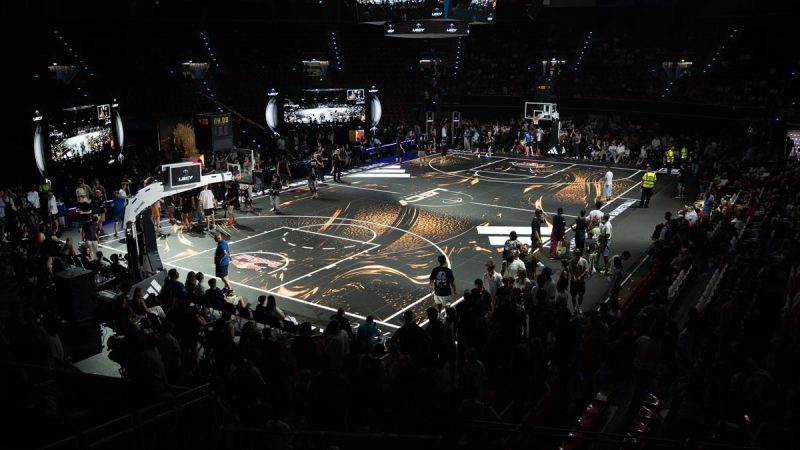
Berlin Dreams’ belief that basketball should be part of the fabric of the city can also be seen beyond regular league play. In August 2026, two basketball courts funded by the Orlando Magic opened at Lietzenseepark, designed in the colours of the Magic and Berlin Dreams. A few weeks later, Berlin Dreams joined Nike and Foot Locker EMEA for a Berlin event surrounding Caitlin Clark’s first signature shoe during the Women’s Basketball World Cup.
The same philosophy extends to the next generation. At a U10 tournament with Nike and Deichmann, twelve teams from different Berlin districts came together, accompanied by around 400 visitors. Basketball is not simply played. It becomes a reason for people to come together.
A City Needs Spaces for Its Communities
But talking about the social power of sport also means talking about the conditions under which that work takes place.
The reality Dube describes for many Berlin clubs is far less glamorous than the images associated with professional basketball. According to Berlin Dreams, a large number of the sports halls the club uses in Charlottenburg Wilmersdorf are in poor condition.
His wish for Berlin is therefore very concrete: distribute resources more effectively, provide greater financial support for club sport and create stronger connections between sport, education and culture.
He points to France’s INSEP, the country’s national high performance sports institute, as one example of how education and athletic development can be closely integrated. For Dube, looking beyond Germany shows that better structures are possible when sport is not treated as a recreational activity on the margins, but as part of education and social development. Because the question of how much talent a country develops does not begin at elite level. It begins in the gym where a child trains for the very first time.
From the Court to the Rotes Rathaus
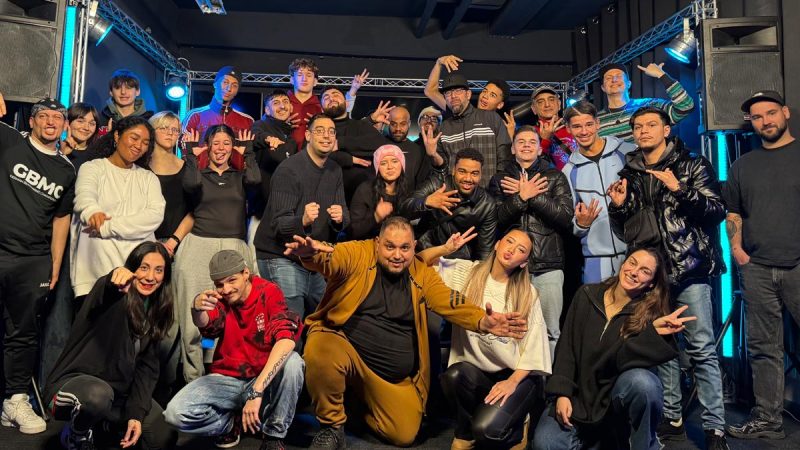
This is where Berlin Dreams and the HipHop Ball come together. Not because basketball becomes part of a cultural programme for one evening, but because both platforms are asking a similar question: Who gets access to spaces, networks and opportunities, and which communities are visible within them?
“The HipHop Ball gives organisations, projects and companies a platform that are often overlooked by politics,” Dube says. “Through HipHop as a cultural force, it connects established and emerging players across this city. The HipHop Ball deserves real credit for that, and that is why we are happy to be part of it.”
On November 14, 2026, Berlin Dreams will become part of the second HipHop Ball Berlin. In an on stage intermezzo at the Rotes Rathaus, the organisation will bring its perspective on basketball, community and the social power of sport into a space usually associated with politics, public administration and decisions about the future of the city.
The contrast could hardly be greater: the basketball court on one side, the ballroom on the other. Sneakers and parquet floors. Street culture and ballroom tradition. Club sport and civic institutions. And yet, both spaces tell a similar story. They bring people together.
For Berlin Dreams, that creates an opportunity that reaches far beyond a single evening. When sport, culture, business and politics do not simply exist alongside one another but actually enter into conversation, new forms of access can emerge. For clubs and organisations. For young people. For athletes. And for communities whose importance to society is often far greater than their presence in the rooms where decisions are made. Berlin Dreams already carries that idea in its name.
Not everyone who steps onto a court will follow the same path. Not every child will become an elite athlete. And not every dream has to end in a packed arena.
But a city should create places where those dreams have the chance to begin.